Listen to the ancient sanskrit chants of Bhagavad Gita, sung in classical melodies by noted devotional singer Sri Vidyabhushana. Listen to all 700 verses of the Gita with a beautiful accompaniment of flute, veena, sitar, mridanga, tabla and tala.

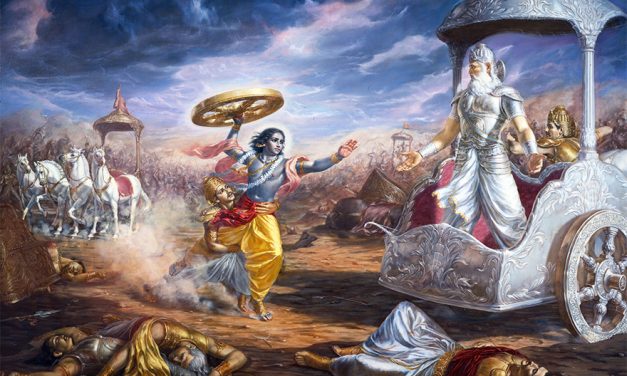
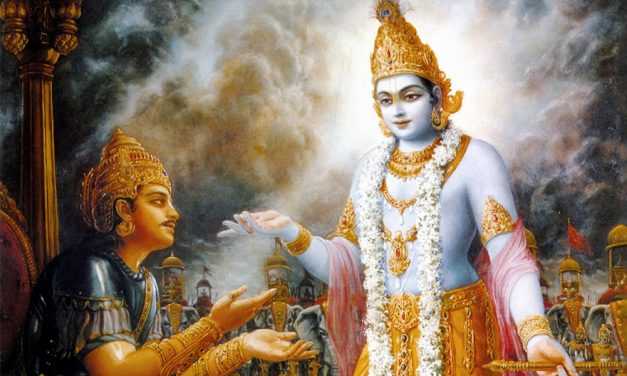
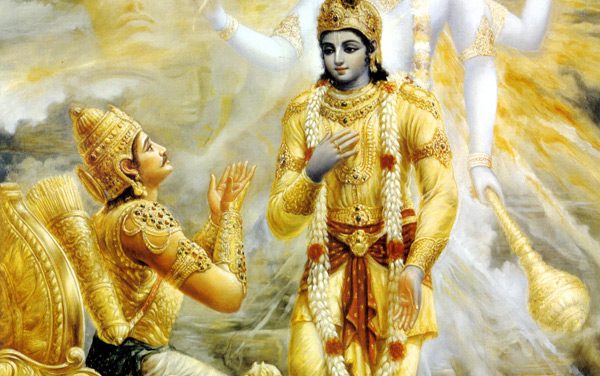
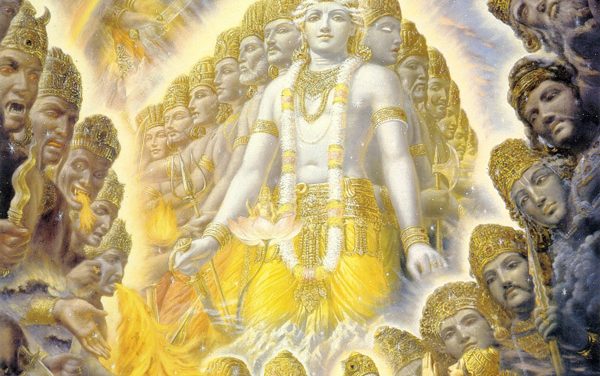
Learn the teachings of the Bhagavad Gita through devotional paintings. Each painting has a description explaining the philosophical meaning.

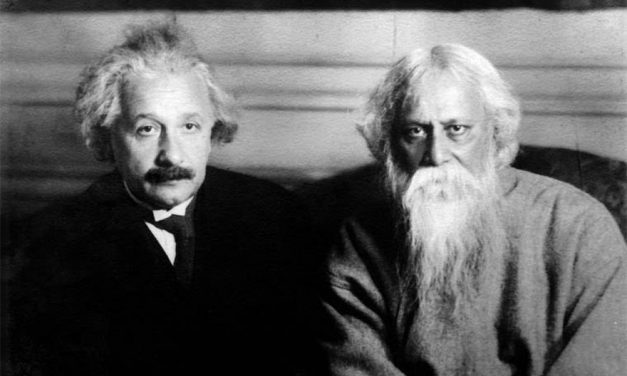
Read reflections and comments by various famous personalities on the Bhagavad Gita. Albert Einstein, Mahatma Gandhi, Henry David Thoreau, Albert Schweitzer, Aurobindo, Carl Jung, Herman Hesse, Ralph Waldo Emerson, Aldous Huxley, and many others.

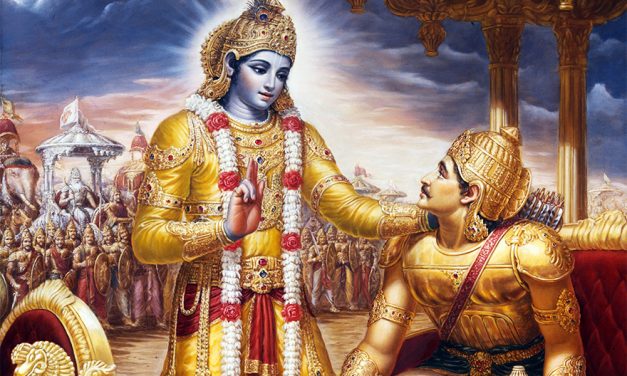
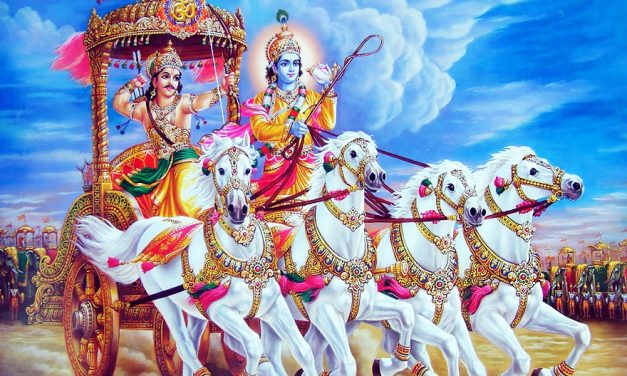
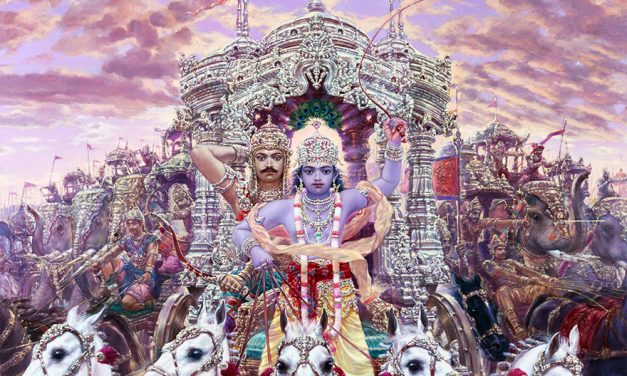
The Bhagavad-gita opens with blind King Dhritarashtra requesting his secretary, Sanjaya, to narrate the battle between his sons, the Kauravas, and their cousins, the Pandavas. Lord Krishna, the Supreme Personality of Godhead, out of affection for His devotee, the Pandava prince Arjuna, has agreed to drive his chariot.
By Bhagavan Sri Krishna | Published 06/1/2006
Category: The Gita: Chapter 1
Article Viewed 58434 Times
Category: The Gita: Chapter 1
Article Viewed 58434 Times

dhritarashtra uvaca
dharma-kshetre kuru-kshetre
samaveta yuyutsavah
mamakah pandavas caiva
kim akurvata sanjaya
dharma-kshetre kuru-kshetre
samaveta yuyutsavah
mamakah pandavas caiva
kim akurvata sanjaya
"Dhritarashtra said: O Sanjaya, after my sons and the sons of Pandu assembled in the place of pilgrimage at Kurukshetra, desiring to fight, what did they do?"
By Sri A.C. Bhaktivedanta Swami Prabhupada | Published 12/1/2005
Category: Articles on the Gita
Article Viewed 246277 Times
Category: Articles on the Gita
Article Viewed 246277 Times

Bhagavad-gita is also known as Gitopanishad. It is the essence of Vedic knowledge and one of the most important Upanishads in Vedic literature. Of course there are many commentaries in English on the Bhagavad-gita, and one may question the necessity for another one. This present edition can be explained in the following way...

Parvati said "My dear husband, You know all the transcendental truths, and by your mercy I have heard the glories of the Supreme Personality of Godhead, Lord Krishna. Oh Lord, now I long to hear from You the glories of the Srimad Bhagavad-gita, which was spoken by Lord Krishna, and by hearing which, one's devotion to Lord Krishna increases"

Once in the South in the town of Pandharpur, a very learned brahmana by the name of Devashyama lived. He was able to perform all kinds of fire sacrifices. He also knew the importance of receiving guest. And by his activities he managed to satisfy all the demigods. But he was not happy and peaceful in his heart and mind.

Lord Vishnu said, "My dear Lakshmi, in the town of Janasthan was a brahmana of the name Jada, who was born in the dynasty of Kaushik. That brahmana gave up the religious activities enjoined in the shastras to be followed by the brahmana class, and took to many irreligious activities. He was very fond of gambling and drinking, hunting, and visiting the prostitutes. In this way, he wasted his wealth.

On the bank of the river Ganges there is a town of the name Kasi, (Banaras), where at the temple of Vishvanath, a great saint of the name Bharata lived. Daily with the greatest devotion, he would recite the fourth Chapter of Srimad Bhagavad-gita. Previously, when Bharat had been traveling on pilgrimage he had gone to the town of Tapodan to take darshan of the Deity of Lord Krishna there. While leaving that town, he saw two Bael fruit trees.

In the state of Madra, there is a town of the name Puru Kutsapur. There lived a brahmana by the name of Pingala. During his childhood he was trained in various brahminical activities and was taught the Vedas. But he had no interest in his studies. When he reached his youth he gave up his brahminical pursuits and started to learn how to play instruments as well as singing and dancing.

On the bank of the Godavari river, there is a beautiful town of the name Pratishthanpur (Paithan), where I am famous by the name of Pippalesh. In that town there was a king of the name Janshruti, Whom the people loved very much and whose qualities were unlimited. He performed daily fire sacrifices, which were so opulent and large that the smoke from them reached the Heavenly pleasure garden known as Nandanvan, and made the leaves of the Kalpavrksa trees black.